


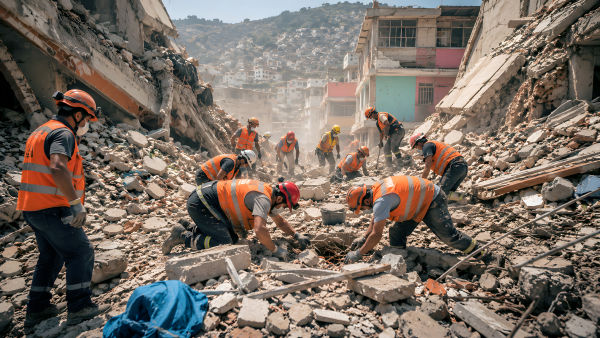
 Following twin earthquakes in Venezuela that have killed at least 1,700 people, rescue teams are in a race against time to locate survivors trapped under rubble. Despite passing the critical 96-hour window where survival rates drop sharply, international and local search groups maintain day-one intensity using a multi-layered approach. These include:
- Trained search dogs that can detect human scent as far as 10m under rubble and find hard-to-navigate paths through rubble
- Rescue workers use sensitive listening devices that can pick up faint tapping, scratching or voices deep beneath collapsed structures
- Specialised cameras are threaded into tight gaps to visually inspect voids and micro drones - nicknamed "cockroach drones" - are also being used on the ground
While the physical window for easy rescue has closed, search and rescue experts emphasize that individuals can survive much longer if they have access to air pockets and water. Teams continue meticulously digging through collapsed buildings, balancing heavy machinery with delicate manual tools to avoid further shifts in the rubble, driven by the lingering hope of finding more survivors alive.
https://www.bbc.co.uk/news/articles/cn75jk07y5do
img: Einsatzkräfte nach verheerendem Erdbeben in Venezuela von Marco Verch unter Creative Commons 4.0