


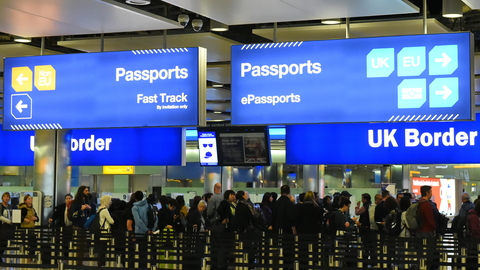
 A woman who is legally settled in the UK was left stranded at a Spanish airport after the Home Office’s post-Brexit visa system mixed her up with her twin sister.
Nidia Webb fell foul of what she was told was a “known issue” with the eVisa, which was brought in as part of the government’s drive to digitise the UK’s immigration system but has faced problems that have caused concern for thousands of people.
Politico reported that Webb, who has lived in the UK for eight years, was told at the departure gate she would not be able to board her flight home. “My digital settled status had become linked to my identical twin sister’s details rather than my own, meaning my status could not be properly matched to my identity,” she said.
img: ID 88942278 | Airport Border Check © 1000words | Dreamstime.com
 A terrifying case of digital stalking has exposed the dark side of connected vehicle technology. Australian businessman Enrico Pucci was convicted of 30 domestic violence offences after using the Tesla car app to remotely track and control his ex-partner’s Tesla.
The victim endured bizarre and frightening harassment when her vehicle's locks, climate settings, speed profiles, and alarms were secretly manipulated. Pucci taunted her during an in-person confrontation, warning, "I am in your car".
Pucci was convicted of 30 domestic violence related charges against Stacey, including using the Tesla car app to harass her.
img: Photo 93770553 © Helgidinson | Dreamstime.com
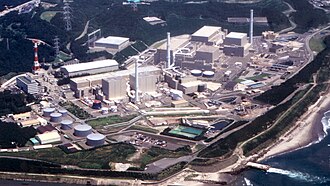 The president of Chubu Electric Power Co., Japan's third-largest utility, said that he and the chairperson are resigning to take responsibility over the company's yearslong manipulation of earthquake safety data for two nuclear reactors and that the operator will withdraw applications to restart them.
Japan has been gradually restarting some of the 54 nuclear reactors it shuttered in 2011, after the Fukushima disaster, when a 9.0 earthquake off Japan’s northeastern coast and a subsequent tsunami caused meltdowns at three reactors operated by Tokyo Electric Power Company Holdings, or TEPCO.
Chubu Electric President Kingo Hayashi said that an outside investigative panel found that the utility had for years provided manipulated seismic data for its Hamaoka No. 3 and No. 4 reactors to ensure the figures met requirements.
With the credibility of the safety data in serious question, the utility has decided to drop the pending restart application for the two reactors, Hayashi said.
img: Cubu Electric Power Co., CC BY-SA 2.0 <https://creativecommons.org/licenses/by-sa/2.0>, via Wikimedia Commons
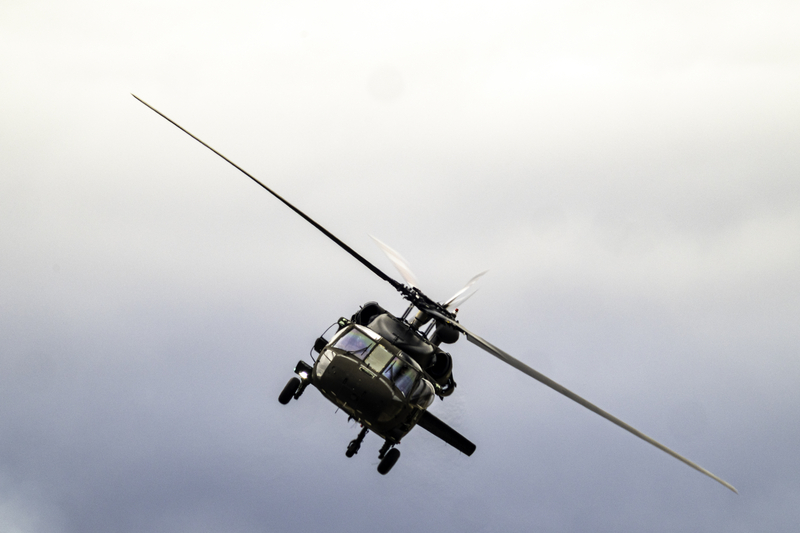
A U.S. Army report has highlighted the many systemic breakdowns that led to the 2025 midair collision between an American Airlines jet and a Black Hawk helicopter near Washington, D.C.
The U.S. Army found many systemic breakdowns that led to last year’s midair collision between an American Airlines jet and a Black Hawk helicopter near Washington D.C. and recommended numerous steps the military should take to prevent future tragedies.
The report recommended that the Army look beyond Washington, D.C., to study the practices in every major city where its helicopters operate to ensure similar risks aren't present. An Army official said the review of helicopter flights in other cities, including Los Angeles and the Seattle-Tacoma region, is ongoing.
img: ID 451052472 © Maurie Hill | Dreamstime.com
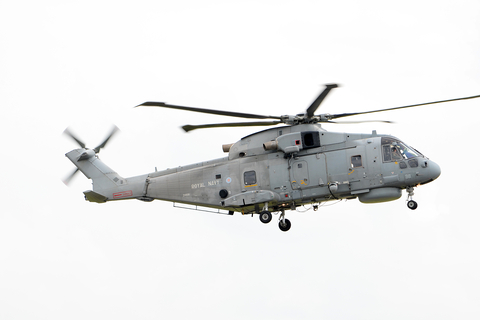 Two years after a Merlin HC Mk 4 flying from HMS Queen Elizabeth ditched in the sea off Dorset, killing Lt Rhodri Leyshon, the board of enquiry report has finally been published. The inquiry found that a fractured engine component triggered an emergency that the crew misdiagnosed, after which two serviceable engines were shut down, leaving the helicopter without power at low level over the sea at night. The report revealed that a component failure, ambiguous cockpit warnings, and crew misdiagnosis led to the fatal ditching.
During a night deck-landing exercise from HMS Queen Elizabeth, a split fuel pump diaphragm on engine two caused a sudden power surge. The aircraft's management system automatically throttled back engines one and three to compensate. Due to ambiguous cockpit warning logic, the crew misdiagnosed this as a double-engine failure and manually shut down the two functional engines. Engine two then tripped its overspeed protection, leaving the helicopter without power.
The investigation cited several compounding factors, including component testing procedures by engine maker Safran, reduced crew flight currency, a breakdown in crew resource management and equipment issues during the post-crash rescue.
img: ID 192481707 © Burnstuff2003 | Dreamstime.com