


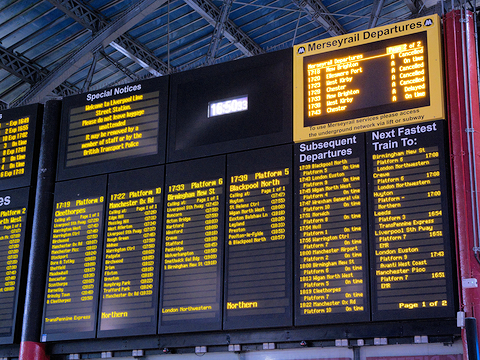
 A brief power failure at Network Rail's Manchester operating centre caused widespread train disruption across the North West of England, raising serious questions about system resilience. Network Rail, the publicly owned body managing Britain's rail infrastructure, relies on regional centres to safely control tracks and signalling. Although the local power cut lasted just 90 seconds, backup systems failed to perform as expected.
Chris Wright, Network Rail's North-West route director, stated systems came back online rapidly, but key communication systems malfunctioned and required reconfiguration and replacement. The resulting signalling failure - acting as the railway's traffic light network - forced trains to stop. Rebooting the network and replacing damaged components took hours, stranding trains and crews out of position across the region. Network Rail has formally apologised to affected passengers, launched an official investigation into the failure, and committed to engineering upgrades to improve system resilience and prevent future occurrences.
https://www.bbc.co.uk/news/articles/c3ekd5784k5o
img: ID 309294160 © Alan5766 | Dreamstime.com
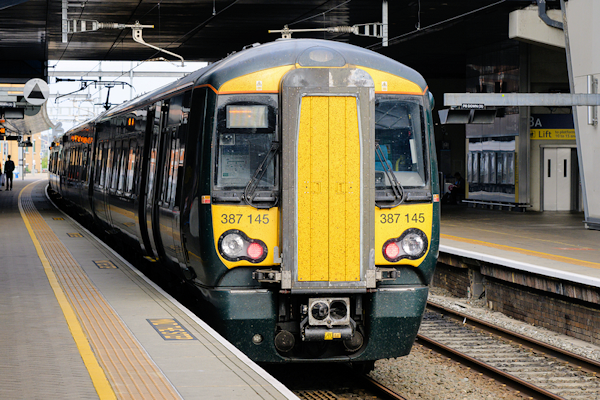 Emergency services have been attending to a passenger train derailment near Lewes on 13th August 2026 after rear carriages of a Southern rail service slipped off the tracks during record-breaking summer temperatures.
The incident occurred at approximately 3:30 p.m. involving the London Victoria to Eastbourne service. Several rear carriages partially derailed and turned onto their sides shortly before reaching Lewes station.
Two passengers suffered serious injuries and 18 others were less seriously injured in the derailment, which happened with 150 people on board.
The derailment coincided with intense climate conditions across Southern England, where local temperatures reached a peak of 38.1°C, marking one of the hottest days on record. Rail safety experts and industry investigators are currently evaluating whether heat-induced track buckling - a phenomenon where steel rails warp under extreme thermal stress - contributed to the incident.
The Rail Accidents Investigation Branch (RAIB) has launched a formal investigation to determine the exact cause of the derailment and assess existing thermal speed restrictions on the network.
https://www.bbc.co.uk/news/live/cly5252xqdvt
img: ID 412950149 | Class 387 Unit © Iandewarphotography | Dreamstime.com
 A US judge in New Mexico has ordered Meta to pay another $567m (£421m) for its failure to warn the public about the dangers its platforms posed to children, marking the largest fine against the company over child safety. Judge Bryan Biedscheid said the social media giant is a "public nuisance" akin to air pollution and that it must put the money in a fund aimed at reducing future harms. The ruling is in addition to $375m in fines Meta was already ordered to pay in the case, for a total of $942m.
Judge Biedscheid compared Meta to a factory, with advertising and content as its product and "the psychological harm and sexual exploitation of children to be the pollution that must be abated".
A spokesman for Meta, which owns and operates Instagram, Facebook, WhatsApp and Threads, said Thursday: "We disagree with the ruling and will appeal. We work hard to keep people safe on our platforms and have been transparent about the challenges of identifying and removing bad actors and harmful content," they added.
"We remain confident in our record of protecting teens online and will continue to defend ourselves against claims that misrepresent the facts."
Regarding the earlier $375m verdict in the case, Meta had said it intended to appeal the ruling and gave a similar explanation. It was the first time that a state had successfully sued Meta over child safety issues.
https://www.bbc.co.uk/news/articles/cd7lz3wr2rlo
img: Meta and the Meta logo are trademarks or registered trademarks of Meta Platforms, Inc.
 The sensitive medical data of transplant patients from across the UK was routinely sent over an unencrypted pager network, an NHS service has admitted. A BBC investigation found NHS Blood and Transplant (NHSBT) sent the names, dates of birth and types of organs being offered or needed to members of hospital transplant teams who were using pagers, unaware they were not encrypted.
In 2019, then-Health Secretary Matt Hancock announced the NHS in England should stop using pagers by 2021, but some parts of the organisation have continued doing so. NHSBT said it was "deeply sorry" and has reported the data breach to the Information Commissioner. It added it has now stopped sending patient data in this way.
https://www.bbc.co.uk/news/articles/clyj92j210do
img: ID 33170258 © Atholpady | Dreamstime.com
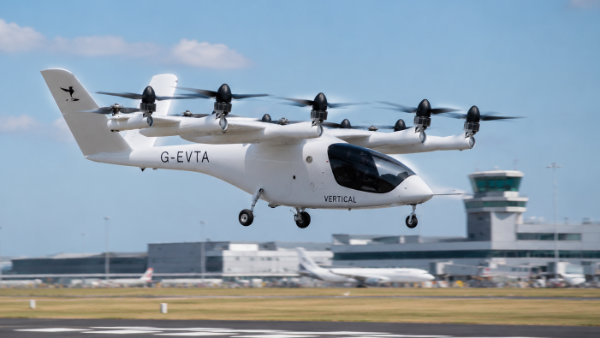 Vertical Aerospace says government has given £10m backing, taking its total investment in the project to £48m.
British flying taxi start-up Vertical Aerospace has said the UK government has expressed interest in buying a military variant of its aircraft as it races to gain approval for flights with paying passengers.
Vertical also welcomed another £10m grant from the government, taking its total UK state funding to £48m.
The company demonstrated its prototype model of the flying taxi on Monday at the Farnborough international airshow, an industry event at an airfield west of London.
The aircraft is one of several electric vertical take-off and landing (eVTOL) aircraft which manufacturers are hoping will revolutionise urban transport by landing quietly – relative to a helicopter – in built-up areas with no direct emissions.
img: AI ChatGPT