


 As self-driving cars get closer to reality, Tesla is striving to remain a big player. But is it sacrificing safety to stay in the game?
For the past few weeks, Geoff Perlman, a 61-year-old technology executive from Texas, has been testing a free trial of Tesla's latest self-driving software as he travels around Austin.
He's impressed: it can handle confusing lane adjustments and park itself in busy lots better, he thinks, than the average human. He's expecting to recommend that his 89-year-old father-in-law upgrades his own Tesla with the system, which costs an extra $8,000 (£5,950), to help out as old age closes in.
But his confidence has its limits. For now, he says, he keeps his eyes on the road and does not pick up the phone to text.
"Staring at the phone when you're in a several thousand pound vehicle travelling down the highway at this point seems crazy to me," he says.
Tesla boss Elon Musk doesn't appear to share his qualms. Last month, he told investors: "We're going to look closely at the safety statistics, but we will allow you to text and drive essentially".
https://www.bbc.co.uk/news/articles/c783qd14zl7o
img: ID 106798847 | Elon Musk © Petr Zamecnik | Dreamstime.com
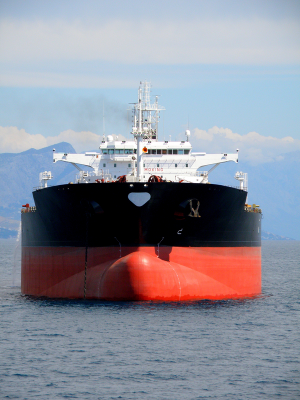 The oil tanker seized by US forces on Wednesday 10th December 2025 had a track record of faking or concealing its location information, apparently to hide its activities, ship tracking data shows.
On Wednesday evening, the US confirmed that its forces seized a vessel during a helicopter-launched raid near the coast of Venezuela. BBC Verify confirmed the ship was the Skipper by matching a sign seen in footage released by the US to a reference photo supplied by TankerTrackers.com, a site which monitors oil shipments.
Data held by publicly accessible tracking sites paints an incomplete picture of the vessel's movements, and before its seizure it hadn't declared its position since 7 November. Maritime analytics firm Kpler also suggested that the vessel had engaged in a ship-to-ship transfer.
US Attorney General Pam Bondi described the vessel as a "crude oil tanker used to transport sanctioned oil from Venezuela and Iran".
The US Treasury department first sanctioned the ship in 2022, when it was sailing under the name Adisa, and was accused of being part of an "international oil smuggling network".
The Skipper has sailed under the flag of Guyana, but the government was quick to release a statement saying that the 20-year-old tanker was "falsely flying the Guyana Flag as it is not registered in Guyana".
Experts told BBC Verify that the Skipper was likely a part of the so-called "dark fleet" - a global network of oil tankers that seek to evade oil sanctions by obscuring their ownership, identities and travel histories.
https://www.bbc.co.uk/news/articles/cy8jvll9j81o
img: ID 7707838 © Xpix | Dreamstime.com
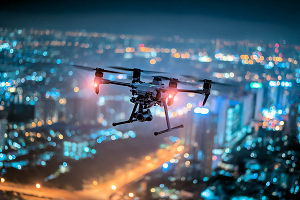 As the people of Swindon enjoy a night out this festive season, a drone will often be keeping a watchful eye on proceedings.
Wiltshire Police is using the technology as part of Project Vigilant, an operation which focuses on tackling violence against women.
The drone will be flown over key areas, such as Swindon's Old Town, to look out for suspicious behaviour.
Det Insp Troy Smith said: "It's pretty much the same as a helicopter, but a lot smaller. We want to make our streets a hostile environment for sexual predators. Women have the right to enjoy their nights out untroubled by these individuals."
A drone pilot is able to watch what the drone is seeing through a camera and report suspicious behaviour to officers on the ground.
Det Insp Smith added: "Women have the right to feel safe when they are out and about in the night time economy, so we target the suspect rather than change the behaviour of potential victims."
This winter is the first time drones have been used to tackle violence against women in Wiltshire.
https://www.bbc.co.uk/news/articles/cd74rdw90xjo
img: AI generated - Midjourney
 Thousands of Airbus planes had to be grounded for a software update after it was discovered that intense solar radiation could interfere with onboard flight control computers.
Around 6,000 A320 planes were thought to be affected - half the European firm's global fleet - but many were able to fly again within hours after undergoing the update.
The UK's aviation regulator said there would be "some disruption and cancellations to flights" though the impact at airports appears to be limited.
Airbus said it discovered the issue after an investigation into an incident in which a plane flying between the US and Mexico suddenly lost altitude in October.
The JetBlue Airways flight made an emergency landing in Florida after at least 15 people were injured.
As well as the A320, the company's best-selling aircraft, the vulnerability also impacts the A318, A319 and the A321 models.
It is understood that on around 5,100 Airbus planes, the issue can be addressed using a relatively simple software update which would typically take about three hours.
https://www.bbc.co.uk/news/articles/c8e9d13x2z7o
img: ID 286792314 | Airbus A320 © Pavol Stredansky | Dreamstime.com
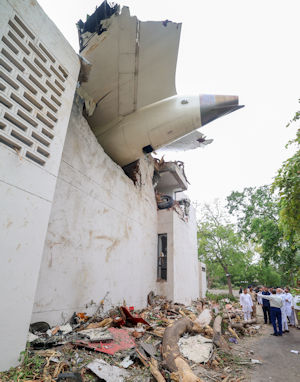 Nearly five months after a plane crash in India which killed 260 people, the investigation has become mired in controversy – with the country's Supreme Court the latest to weigh in. Flight 171 was en route to London from Ahmedabad in western India on 12 June. It crashed into a building just 32 seconds after taking off.
An interim report was released in July, but critics argue it unfairly focused on the actions of the pilots, diverting attention away from a possible fault with the aircraft. On Friday, a judge in India's Supreme Court insisted that nobody could blame the aircraft's captain. His comments came a week after the airline's boss insisted there was no problem with the aircraft.
Capt. Amit Singh, founder of the Safety Matters Foundation, an organisation based in India that works to promote a safety culture in aviation has produced a report which claims the available evidence "strongly supports the theory of an electrical disturbance as the primary cause of the engine shutdown" that led to the disaster.
He believes an electrical fault may have caused the Full Authority Digital Engine Control (FADEC), a computerised system which manages the engines, to trigger a shutdown by cutting off the fuel supply.
https://www.bbc.com/news/articles/c33pzypkkdzo
img: Prime Minister's Office (GODL-India), GODL-India <https://data.gov.in/sites/default/files/Gazette_Notification_OGDL.pdf>, via Wikimedia Commons