


What is the Goal Structuring Notation (GSN)?
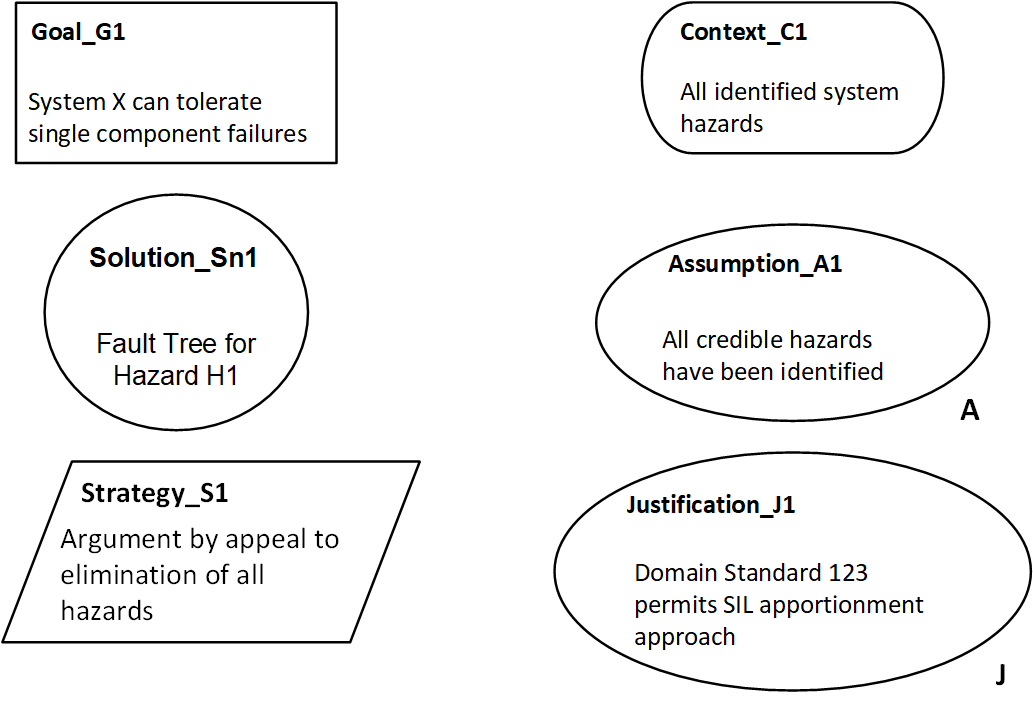
The Goal Structuring Notation (GSN) – a graphical argumentation notation – explicitly represents the individual elements of any safety argument (requirements, claims, evidence and context) and (perhaps more significantly) the relationships that exist between these elements (i.e. how individual requirements are supported by specific claims, how claims are supported by evidence and the assumed context that is defined for the argument). The principal symbols of the notation are shown in Figure 1 (with example instances of each concept).
Figure 1 – The Principal Symbols of GSN
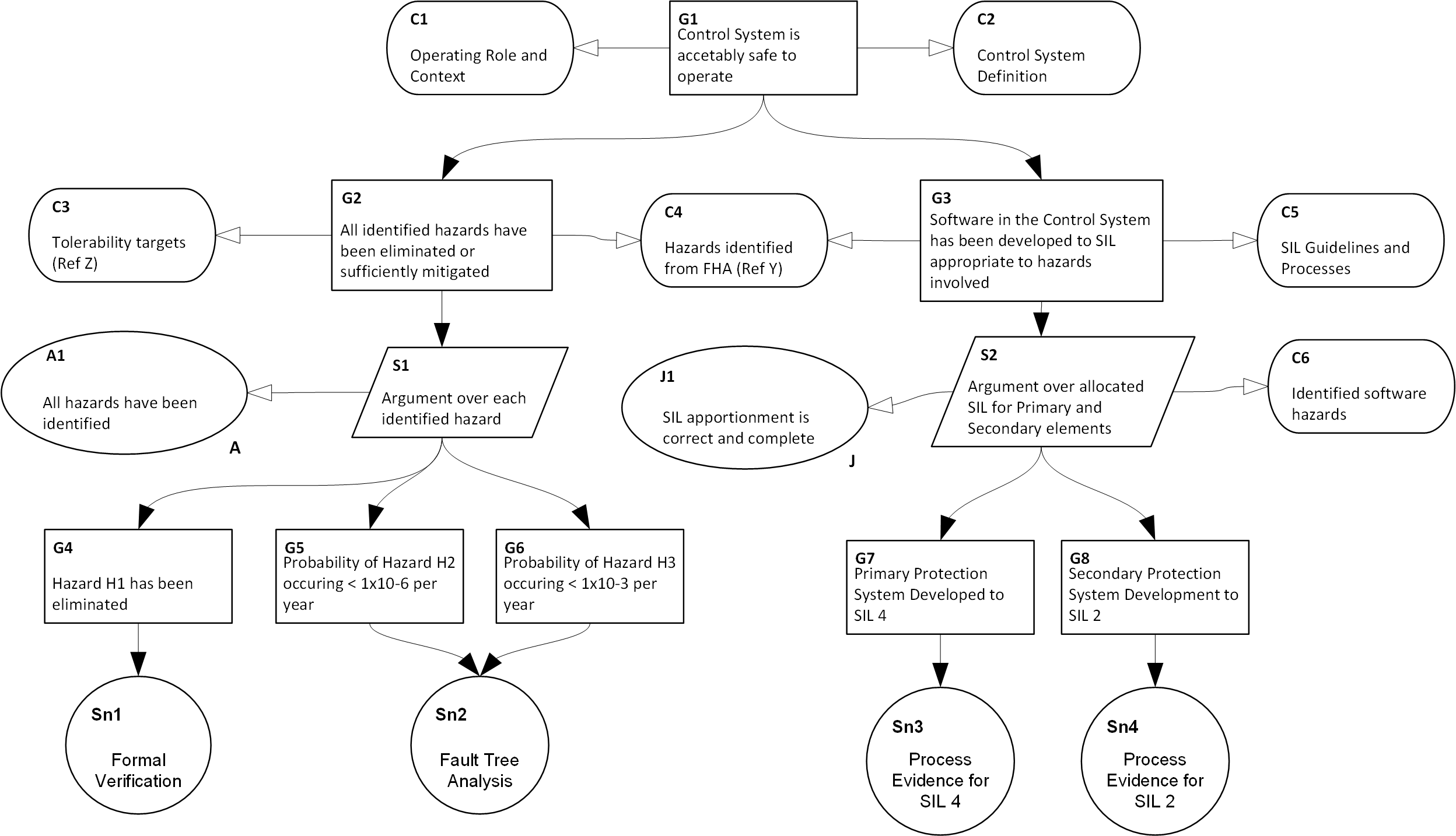
When the elements of the GSN are linked together in a network they are described as a ‘goal structure’. The principal purpose of any goal structure is to show how goals (claims about the system) are successively broken down into sub-goals until a point is reached where claims can be supported by direct reference to available evidence (solutions). As part of this decomposition, using the GSN it is also possible to make clear the argument strategies adopted (e.g. adopting a quantitative or qualitative approach), the rationale for the approach and the context in which goals are stated (e.g. the system scope or the assumed operational role).
Figure 2 – An Example Goal Structure
The key benefit experienced by companies adopting GSN is that it improves the comprehension of the safety argument amongst all of the key project stakeholders (e.g. system developers, safety engineers, independent assessors and certification authorities). In turn, this has improved the quality of the debate and discussion amongst the stakeholders and has reduced the time taken to reach agreement on the argument approaches being adopted.